Essential Tips for Hiking Ijen Volcano
Thinking about hiking Mount Ijen in Indonesia? Here’s what you need to know before you go!
Indonesia is home to some of the world’s most scenic mountainscapes and there’s plenty to explore both during the day and night for those who love to hike.
One of the most popular sunrise hikes in Indonesia is the Mount Ijen crater hike. You can hike right into the crater of an active volcano and see the magical natural blue fire that is the product of sulphuric gas.
In fact, one of the reasons Ijen is so popular is that it is the largest blue flame area in the world.
I absolutely loved this hike, but I did feel woefully unprepared for what lay ahead of me when I signed up for this, so I wanted to share some information and tips for fellow travellers looking to do this sunrise hike.
What to expect
First things first, this is a nighttime hike. The famous blue flames are only visible in darkness, so expect to be picked up around midnight or 1 am.
Depending on where you’re coming from, the drive can take several hours, so you’ll want to factor this into your itinerary.
Once you arrive at the base camp, your guide will give you a short briefing and hand out gas masks.

These are essential because the crater emits strong sulphur fumes that can be overwhelming, especially when the wind changes direction.
Expect temperatures to be quite cold at the base, especially when you arrive, but you’ll warm up quickly once you start hiking.
I layered up with a hoodie and a windproof jacket at the start, but ended up taking my hoodie off halfway up.
The hike itself starts off relatively gentle, but gets progressively steeper.
It takes about 1.5 to 2 hours to reach the crater rim, and another 30–45 minutes if you choose to descend into the crater.
This part is optional as it’s more dangerous, and you can still enjoy the sunrise of the acid lake, but you won’t see the blue flames.

The flames are an amazing sight to see, though they will still be quite a way away and quite small.
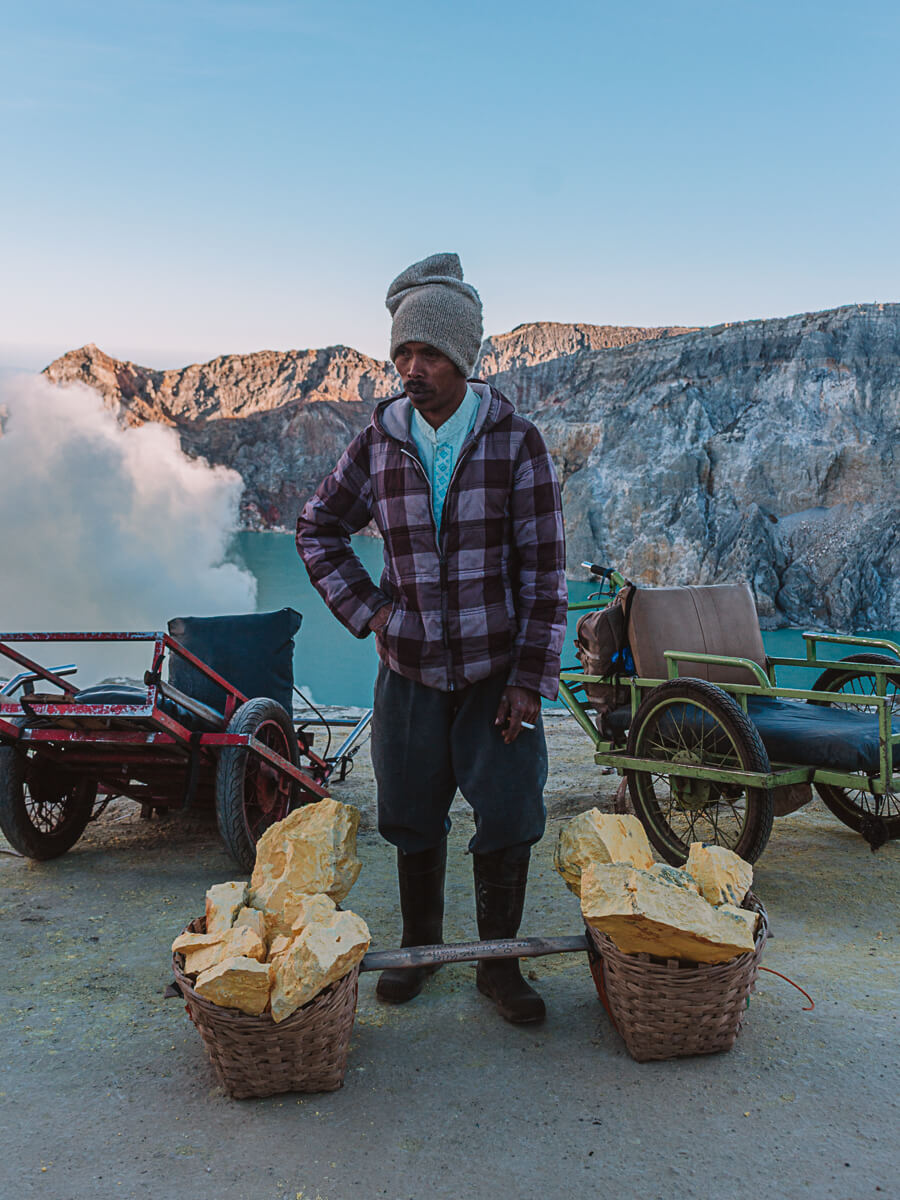
As you hike, you’ll be passed by miners carrying baskets of bright yellow sulphur on their backs.
They navigate the rocky path with such skill and grace, which is extraordinary given the load they carry.
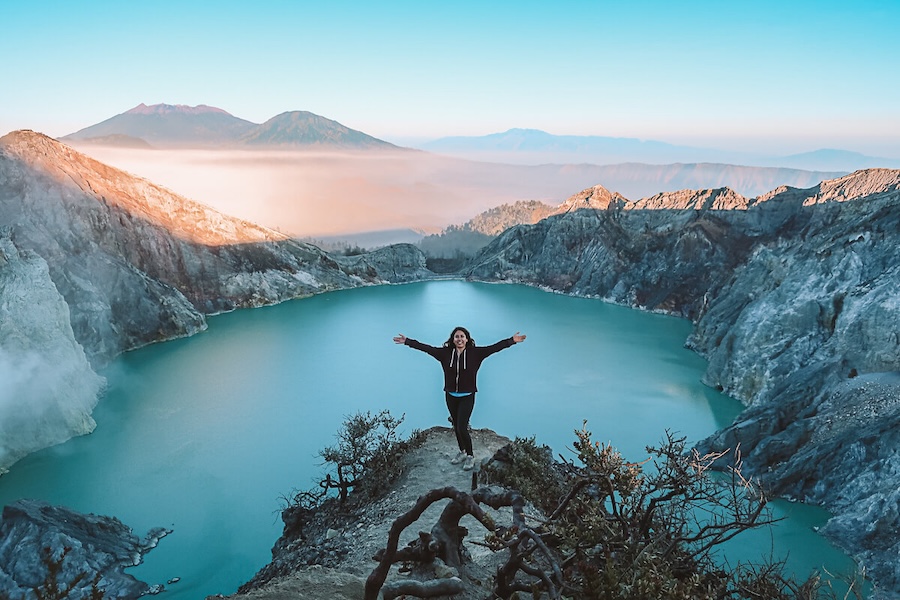
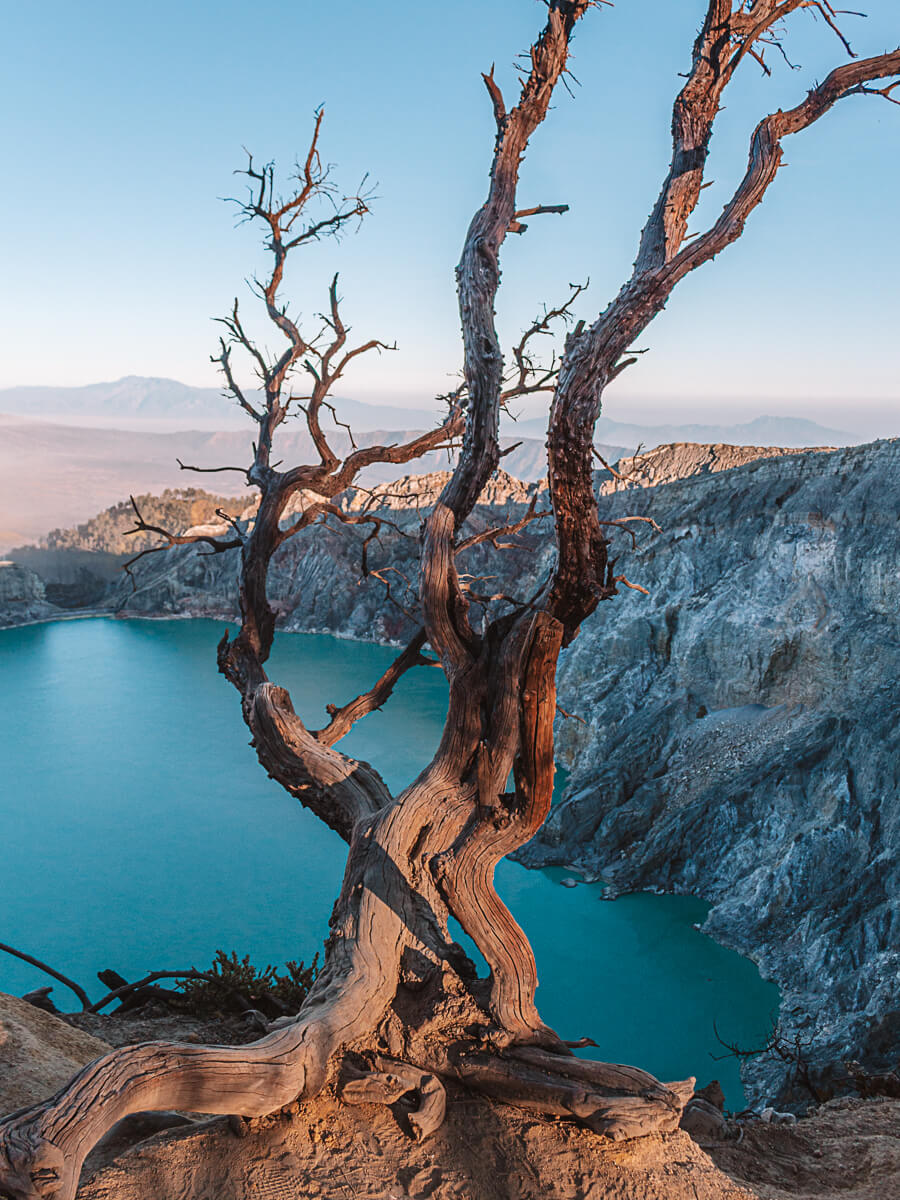
Once you are out of the crater, and the sun begins to rise, the landscape transforms – mist lifts from the lake, and you’ll have a breathtaking view of the crater lake.
Tips
Book an overnight stay
If possible (and time-permitting), stay nearby in Banyuwangi or Bondowoso before your hike.
Many people (myself included) do it as part of a journey from Bali, but it makes for a rather long and tiring day and night.
Staying nearby means you can get a few hours’ rest and start the hike fresher.
When I did the tour from Ubud, we were picked up in the afternoon, drove to a hotel where we had dinner and a quick nap before meeting at 1am to travel to the base of the hike.

At the end of the hike, we were taken back to the same hotel where we could shower and freshen up, before making our way on to Seminyak.
It’s a shame we were too tired to enjoy the facilities properly, as the hotel had a lovely pool with ocean views.
It worked as a way to save travel days, but it also meant packing up all our luggage beforehand, and taking it with us, which was a bit of a logistical faff.
Bring water and snacks
Although there’s often a small warung (food stall) at the base, once you start the hike, there’s nowhere to buy anything.
Definitely bring a decent amount of water (at least one litre) and some snacks or energy bars to keep your energy levels up throughout the hike.
Wear good shoes
This is one of the most important things I wish I’d known beforehand. I wore regular trainers (which, admittedly, had almost no grip), and I kept slipping on the loose, powdery ground on the way down.
Our tour guide had to hold my hand the whole way down so I didn’t just slide down on my bottom!
Hiking boots or sturdy trail shoes with good tread will make a world of difference, especially as some parts of the trail are extremely steep and unstable.
Bring lots of layers
Temperatures at the base can drop below 10°C at night, but as soon as you start walking, you’ll heat up quickly.
The trick is layering – think leggings or lightweight hiking trousers, a long-sleeved top, a fleece, and a windbreaker or jacket.
Gloves and a hat are also handy for the start.

Pack a headtorch
Check if your tour guide provides headtorches and, if not, I’d recommend bringing your own.
It’s much easier (and safer!) than holding a torch in your hand, especially since the terrain is uneven and sometimes slippery.
You’ll want both hands free to grab rocks or steady yourself.
Wear things you don’t mind getting dirty
The volcanic dust gets everywhere.
Seriously.
On your clothes, in your shoes, and even in your bag.
The descent into the crater is especially dusty, so it’s best to wear older clothes that you don’t mind getting marked.
Take it seriously – it’s dangerous!
Something that isn’t emphasised enough is how dangerous this hike can be, especially if you choose to go down into the crater.
There isn’t a proper path down, instead it’s a steep, rocky, and dusty slope where the ground can give way easily.
People slip all the time, and there are sheer drops nearby.
Go slowly, wear proper footwear, and don’t feel pressured to go all the way down if you’re feeling uncomfortable.
Respect the Miners
One of the most eye-opening parts of the experience was watching the sulphur miners at work. They carry enormous loads of sulphur (sometimes over 70kg!) up steep, steep paths, often wearing minimal protective gear.
It’s incredible to see their strength and endurance, but also a reminder of the hardships some people face in order to provide for themselves and their families.
Be respectful, don’t block their way, and if you take photos, do so discreetly or with permission.
FAQ
How long does the Mount Ijen hike take?
From the base to the crater rim and back usually takes around 3–4 hours, depending on your pace.
If you stay for sunrise photos (which is what I did), expect the hike to take around 5–6 hours total.
Can you see the blue flames without going into the crater?
No, you cannot see the blue flames without going inside the crater.
Is it safe to hike Mount Ijen?
Yes, if you follow safety instructions, wear proper gear, and use your gas mask when fumes are strong.
The descent into the crater, however, is definitely not for everyone – it’s steep, dusty, and can be slippery.
If you have mobility issues or are travelling with children, you might want to give this one a miss.
When is the best time to hike Mount Ijen?
The dry season (May–October) is ideal. I went in August, and the conditions were perfect: cool at night, clear skies, no rain and beautiful sunrises.
Do you need a guide?
Yes. All visitors are required to follow a guide if they’re going into the crater, both for safety reasons and because the paths aren’t always well marked in the dark.
Final Thoughts
Hiking Ijen was a rare travel experience and one that I would thoroughly recommend. I have never seen anything quite like these natural blue flames or the turquoise blue acid lake, and probably never will.
The hike is challenging and sometimes uncomfortable, but absolutely worth it.
If you’re planning to go, prepare properly, wear sturdy shoes, and go in with an open mind and a sense of respect for both nature and the people who work there.
You’ll come away tired, dusty, and probably in desperate need of a nap – but also with a memory that’ll stick with you long after you’ve left Java behind.
If you’re looking for more things to do in Java, you may enjoy these posts:
- The Lucky Boomerang Bookshop in Yogyakarta
- Visiting Mbah Satinem from Netflix’s Street Food: Asia
- Ramayana Ballet at Prambanan
- Things to Know Before Visiting Borobudur
Or if you’re heading to Bali next, you may find these posts about Ubud helpful: