Bali Day Tour from Ubud: Waterfalls, Temples & Rice Paddies
Are you thinking about booking a day tour from Ubud to see Tegenungan Waterfall, Goa Gajah, Tirta Empul or Tegalalang Rice Paddy? Here’s what you need to know before you book.
If you’re visiting Bali for the first time, then you’ll want to go on a tour of some of the island’s best and most beautiful sights.
It’s relatively cheap to hire a private car for the day in Bali, so I’d recommend hiring a car for you and your group and hit up some of the best and most popular sites around the island.
I did a one day tour from Ubud to Eastern Bali, including beautiful temples, rice fields and crafts with a local guide.
We wandered around Tegenungan Waterfall, went to the temple of Goa Gajah, experienced the spirituality of Tirta Empul Temple and went to an iconic Bali rice paddy.
Find out more and book a private Bali day tour here (with free cancellation available!).
Tegenungan Waterfall
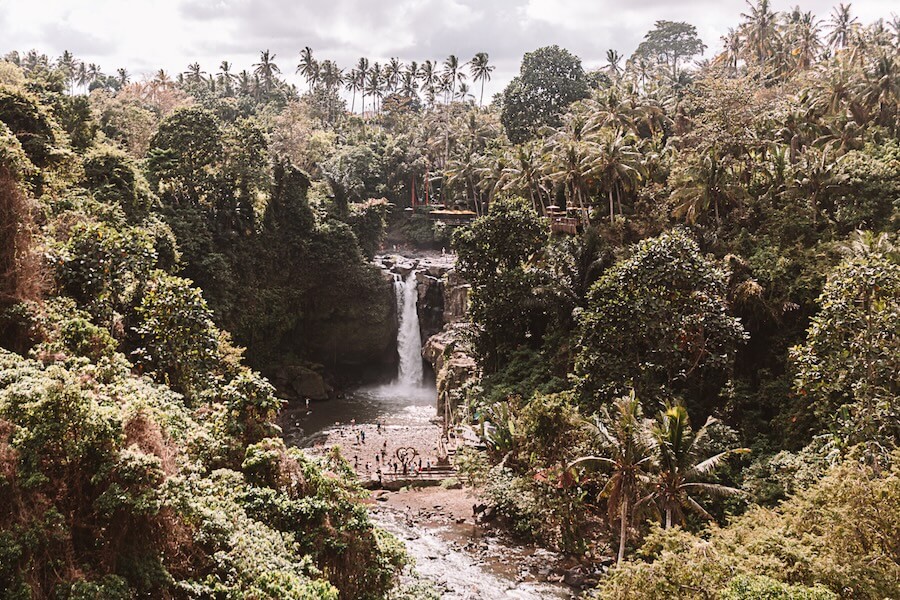
The first stop on this tour from Ubud is Tegenungan Waterfall, about a 30-minute drive from Ubud. Set in the village of Tegenungan Kemenuh on the Petanu River, this 15-metre cascade is one of Bali’s tallest waterfalls – and the highest you’ll find near Ubud.
The path down to the falls winds through lush greenery and rock formations, but be prepared for the 150 steps. They’re uneven, often wet, and can be surprisingly slippery, so take your time.
As you get closer, you’ll spot plenty of people swimming at the base. Although it’s a popular thing to do, my taxi driver strongly advised against it.

The water isn’t fresh mountain water; it’s a mix of runoff from hotels, rice paddies and neighbouring rivers, so it can be quite murky.
If you’ve seen photos online with bright blue water, consider them heavily edited – the reality is far more brown than turquoise!
There are lots of photo spots around the site, from heart-shaped signs to woven “nests” and swings. A couple of these props are free, such as the teardrop nest and the Angry Birds-themed one, but many charge a small fee of around 5,000 IDR. There’s also a couple’s swing for roughly 200,000 IDR.

The larger swings, however, cost around 350,000 IDR. I’d skip them here and save your money for the swings at the rice paddies later in the tour: they’re cheaper and come with far better views.
Entry to Tegenungan Waterfall isn’t free – it’s around 15,000 IDR to access the mid-level viewpoint. If you’re only visiting the waterfall and not continuing on a tour, you’ll also find several “clubs” at the top offering sunbeds, a pool, restaurants and a bar. Basic entry is typically around 20,000 IDR.
Goa Gajah (Elephant Cave)
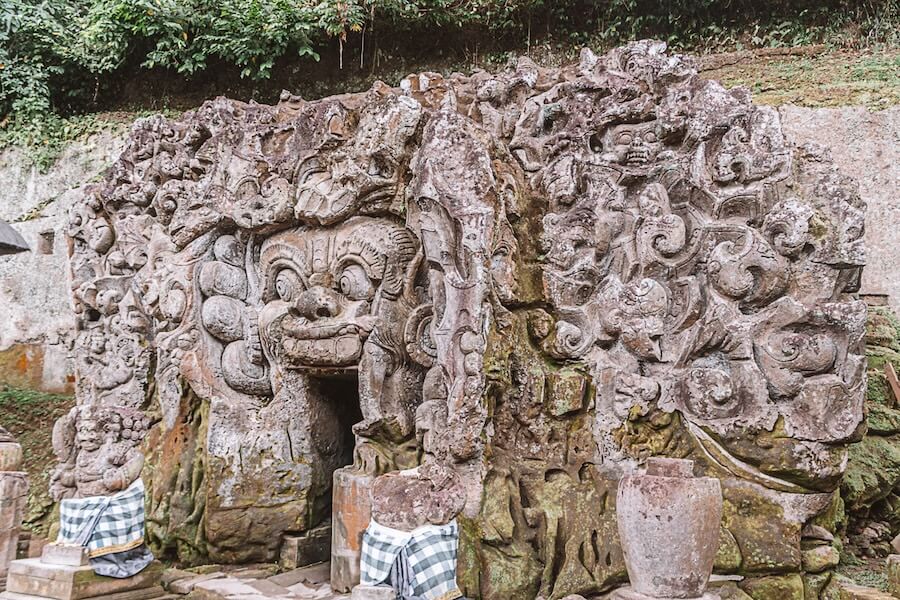
Next up on this Bali tour is Goa Gajah, also known as the Elephant Cave.
Despite its allusions to one of nature’s largest animals, this is a relatively small cave dating back to the 9th century and dedicated to Hindu Gods.
What it lacks in size, it makes up for in atmosphere: moss-covered stone, jungle surroundings, and intricate carvings that transport you back through centuries of Balinese history.
There are mixed accounts as to why this place is nicknamed ‘Elephant Cave’. Some say it’s because the stone carvings at the entrance of the cave (a dramatic face carved into the rock, mouth agape) vaguely resemble an elephant.
Others say it’s because of the shrine to Ganesh, the Hindu God with an elephant head, found inside. Others still say it’s because the nearby Petanu River was once called the Elephant River.
Entry to the cave costs 15,000 IDR, and it’s definitely worth a stop on your Ubud itinerary, especially if you are seeking respite from some of Bali’s busier stops and a more spiritual and historic site.
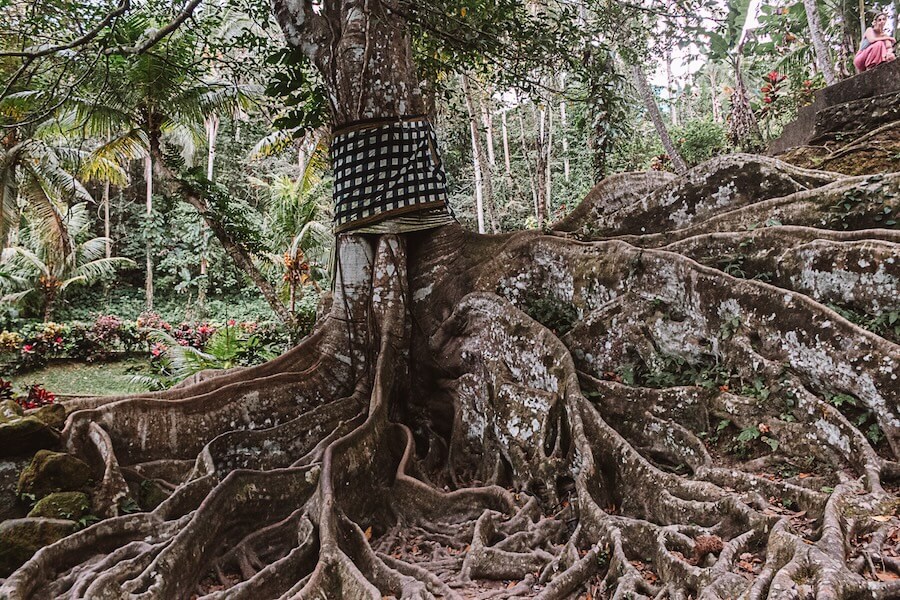
As with all temples in Bali, you must be dressed modestly to enter; otherwise, you will be provided with a sarong to wrap around yourself.
Tirta Empul Water Temple
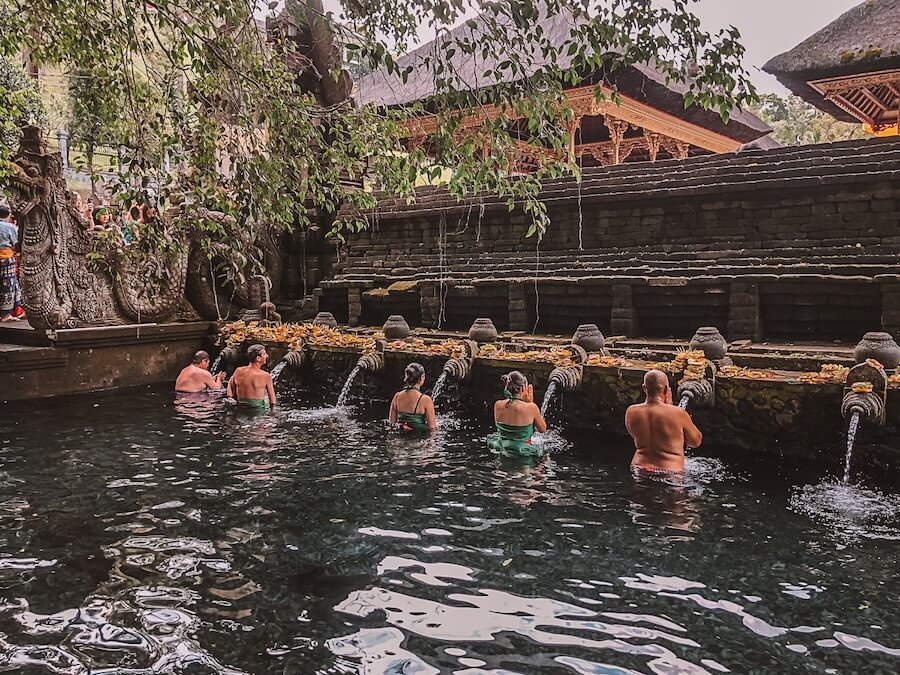
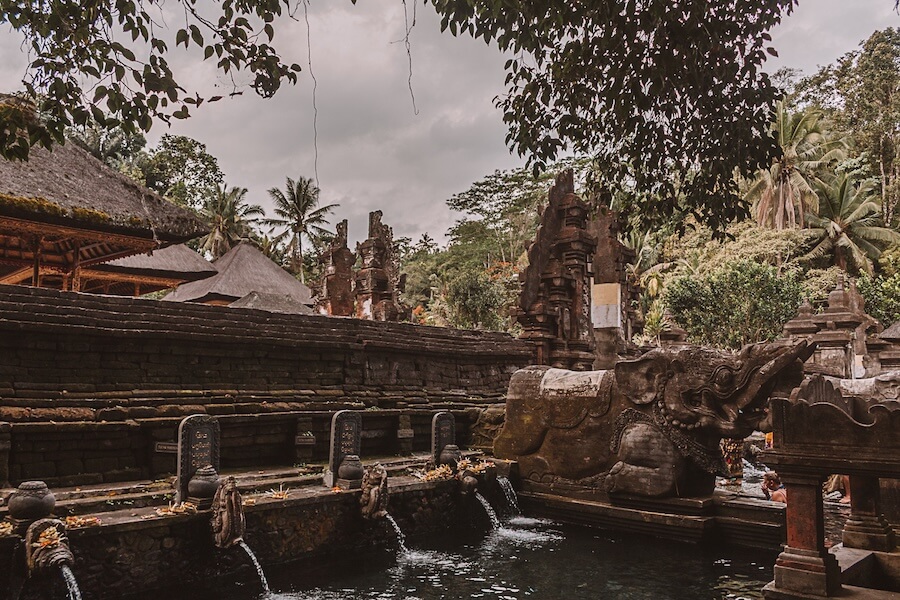
Tirta Empul is a holy spring, believed to have purifying and healing properties, and is a central place for Balinese Hindus to perform purification rituals.
Today, visitors can participate in this ancient tradition and purify themselves through a ritualistic washing process. There’s a modest entrance fee, and we paid 35,000 IDR, which includes two entrance fees, the use of a locker and two sarongs.
It’s essential to note that you cannot wear a normal sarong; instead, you must use the sarongs provided by the temple.
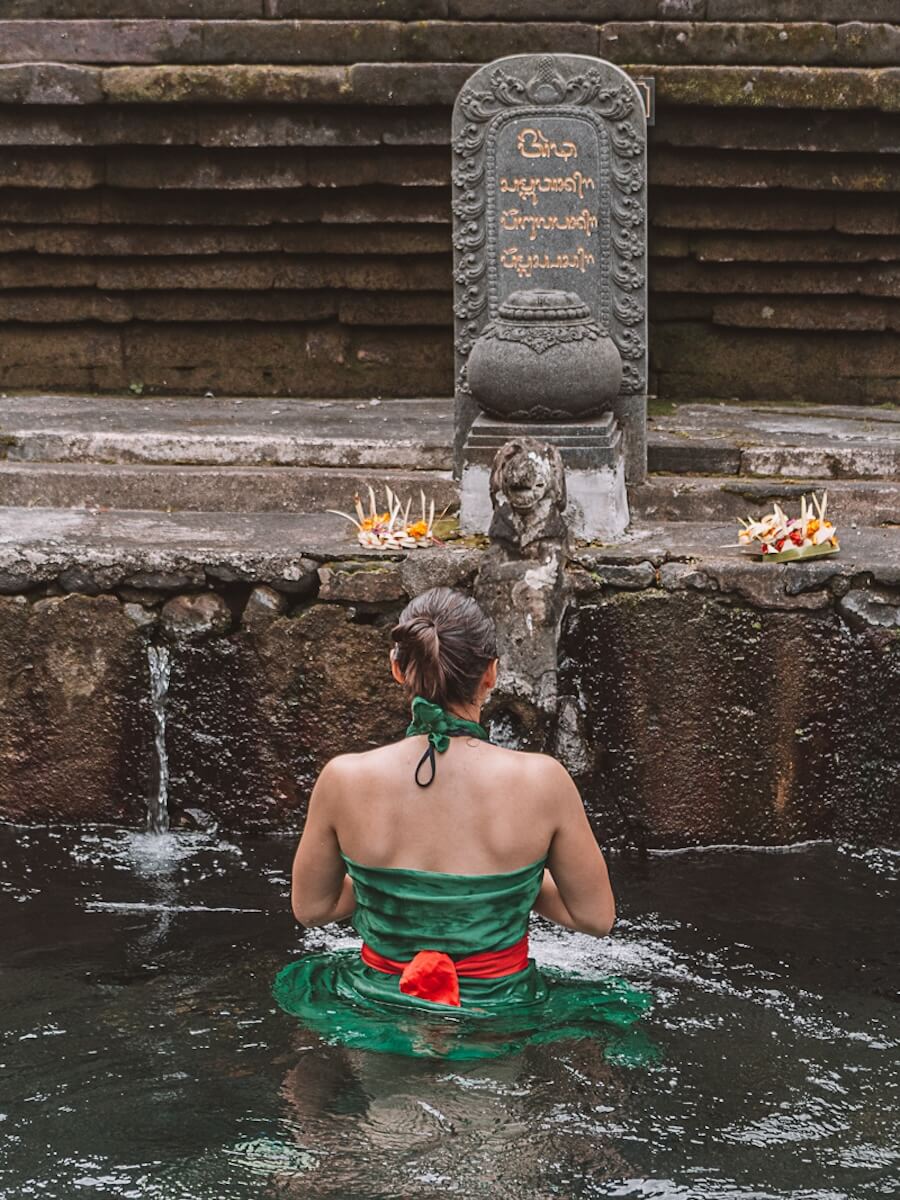
As you wade through the water, you’ll approach a series of spouts, where you’ll wash your head, symbolising purification. You’ll need to move gently through the water, as it is also home to koi fish, adding to the serene ambience.
This is a popular experience among visitors to Bali, so I highly suggest going early in the day or being prepared to queue a little.
The queue wasn’t too bad when I visited, but the light queueing meant we had to move quite slowly through the water, which actually gives you more of a chance to pause, reflect and admire the temple and stone carvings as you move through the water.
There are two bathing areas, and it’s recommended to wear a swimming costume underneath the sarong for convenience. Don’t forget to bring a towel, as they are not provided.
Before entering the water, remove your flip-flops and leave them on the side.
The changing room is small and basic, with limited hooks and a wet floor, so consider bringing plastic bags to keep your belongings dry.
This is an unforgettable experience, and the temple’s tranquil atmosphere makes it a must-visit destination in Bali.
Please note that women who are menstruating are not permitted to enter the water. This is based on ancient customs and the view that menstrual blood is ‘dirty’ or impure.
Whether or not you agree with that, you should be respectful of their traditions and follow their rules.
Tegalalang Rice Paddy
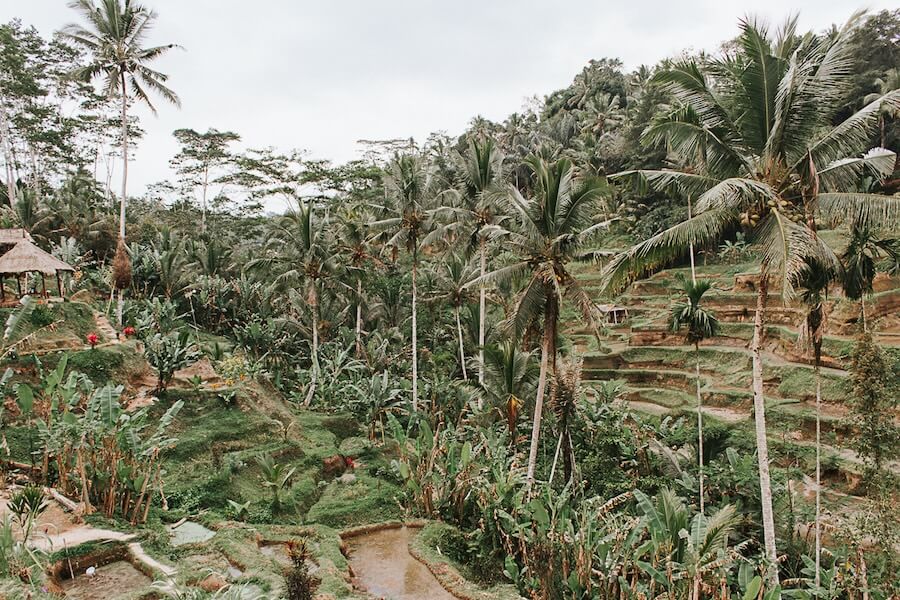
A visit to Tegalalang Rice Terrace is a classic Bali experience that is not to be missed – the layered emerald fields are absolutely stunning.
Entry costs around 10,000 IDR, but do be prepared for additional “donation points” as you walk through the terraces.
These aren’t formal fees, but locals will often ask for a small contribution to pass.
The amount isn’t specified, but our taxi driver recommended offering 10,000 IDR for the group at each stop, and this was always accepted with a smile.
Scattered throughout the terraces you’ll also find several swings – yes, the iconic Bali swings you’ve probably seen all over Instagram.
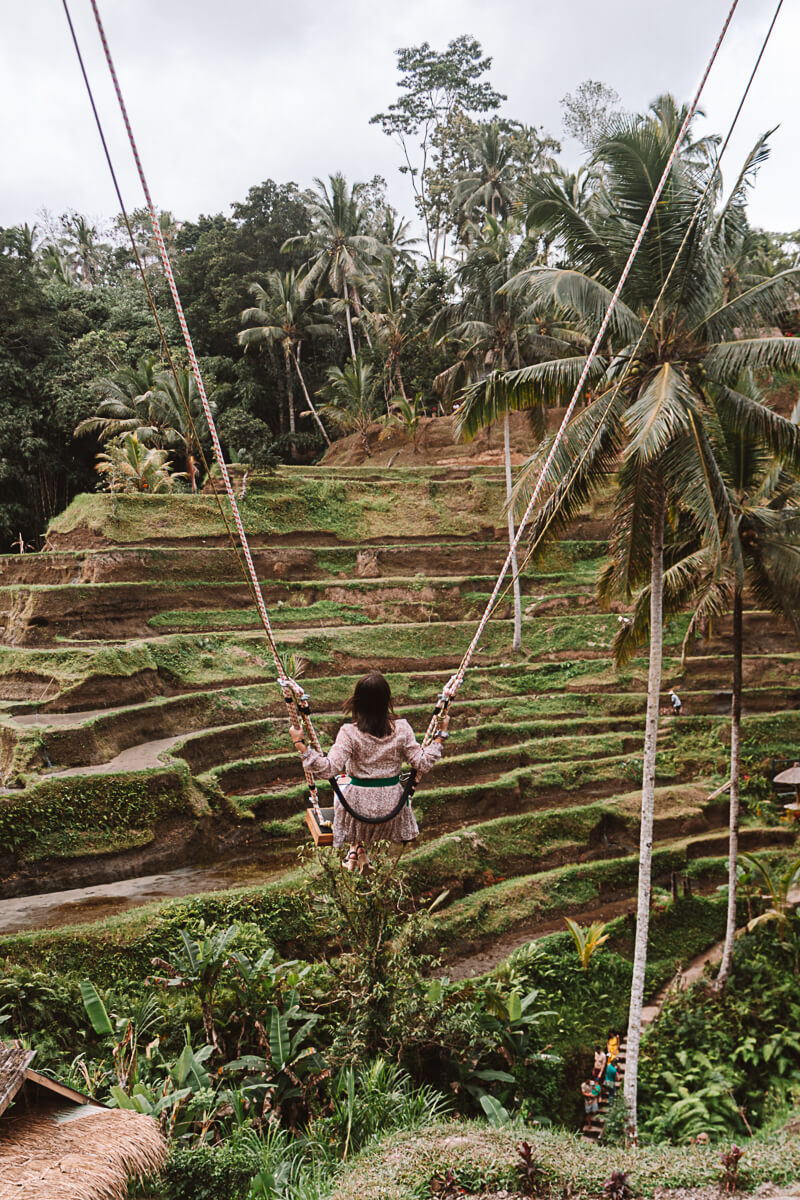
At Tegalalang, they cost 100,000 IDR per person, and there are a couple located at different viewpoints. If you’re after that quintessential Bali photo, this is where I’d suggest doing it.
A quick note on expectations: for safety, you’ll be strapped into a thick harness worn over your clothes.
It’s very visible in photos, so I’m not entirely sure how some influencers seem to make theirs disappear – possibly a bit of Photoshop magic. That’s what I did!
Still, the swings at Tegalalang feel far less intimidating than the ones at the waterfall, and the views here are undeniably beautiful.
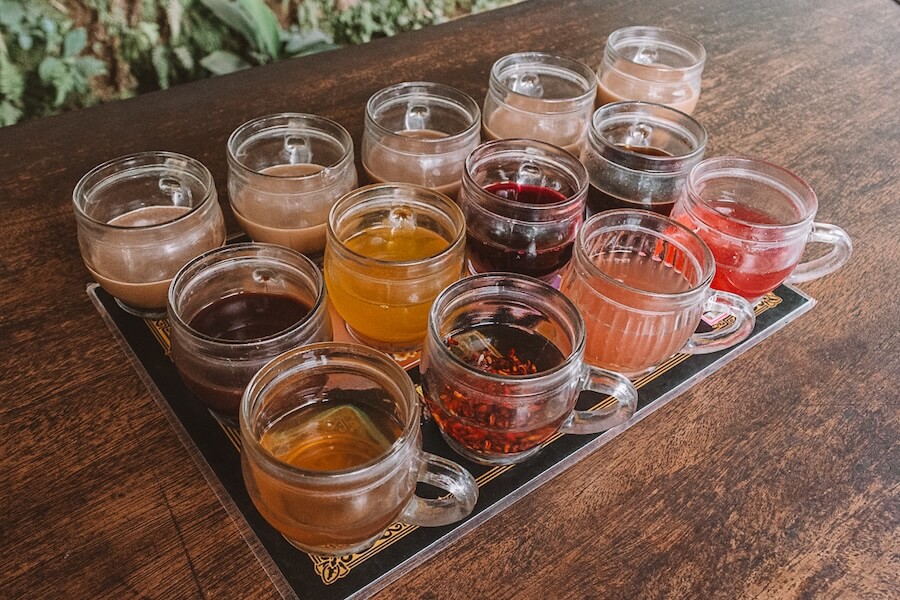
Additional Stop: Coffee Plantation
There was also the opportunity to visit one of Bali’s many coffee plantations, which was a fascinating (and free!) way to learn more about how coffee and tea are grown and produced on the island.
Entry includes a complimentary tour with an English-speaking guide who walks you through the plantation, showing you the plants up close before inviting you to sample a wide range of drinks. There are some truly unique flavours on offer, from mangosteen and avocado coffee to herbal teas, and you can taste as many as you like.
You can also try the famous Luwak coffee, made using beans digested by the civet cat. While they assured us that their process was ethical, I’ll be honest, I wasn’t entirely convinced.
A few civets were kept in small cages, including one asleep inside the shop, which left me feeling a bit uneasy about visiting.
At the end of the tour, there’s the option to buy some of the coffees and teas you’ve tried. Prices are fairly reasonable – around 50,000 IDR for a small box of most flavours (70,000 for avocado), or 110,000 for a larger box.
They also sell small coffee pots for about 80,000 IDR.
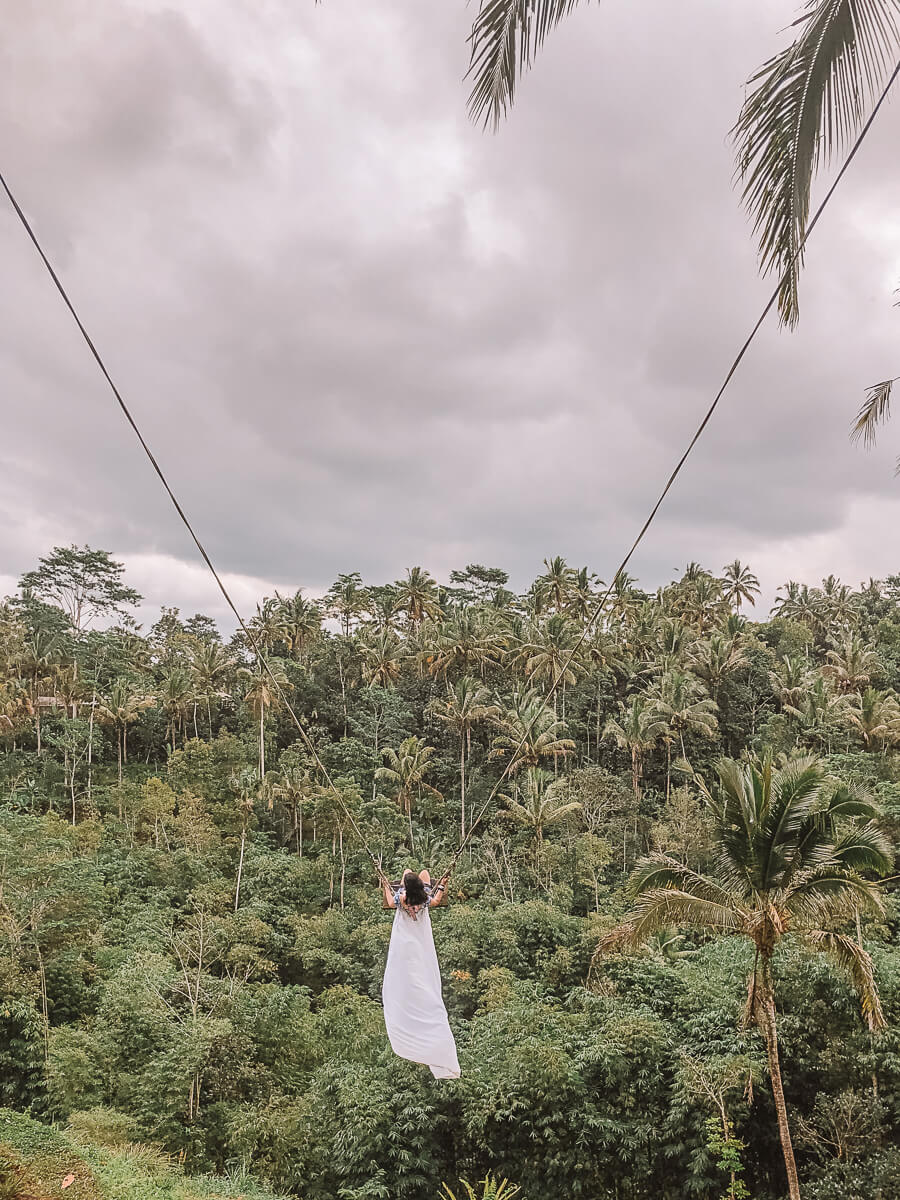
There’s also a “Bali swing” photo opportunity on site, but I’d recommend skipping it here.
Trust me, I experienced this myself and regret it.
It costs 200,000 IDR and involves wearing a strange sarong over your clothes.
The harness straps go over your shoulders and around your legs, which isn’t ideal if you’re wearing a dress, and you’ll be swung both forwards and backwards (which can feel a bit awkward).
There are much better and more scenic swings to try at the rice paddies if you’re after that iconic Bali photo.
Practical Information
We hired a driver from around 9:15am to 5:30pm for 450,000 IDR, which is around £20.
Between the three of us, this worked out at around £7 per person!
You’ll have to pay the entrance fees to all of the above, too, which was roughly 225,000 IDR in total, so just £10.
We totally forgot to plan a pit stop for lunch on our day out. I would recommend discussing a lunch stop with your driver at the beginning of the day – ask them for tips on where best to stop and where there are local stalls or restaurants that you could visit.
Most of the above places had food stalls, so you will have options, but you’ll want to work out the timings with your driver.
Find out more and book a private Bali day tour here (with free cancellation available!).
Check out my other Indonesia guides to help you plan your trip:
Things to Know Before Visiting Borobudur
Ramayana Ballet at Prambanan
Things to Do in Ubud, Bali
Why Not to Visit Pura Lempuyang (Heaven’s Gate), Bali
8 Things to Know About the Monkey Forest, Bali
Things to Know Before Hiking Mount Ijen