15 Thoughtful Book Club Questions for Small Things Like These
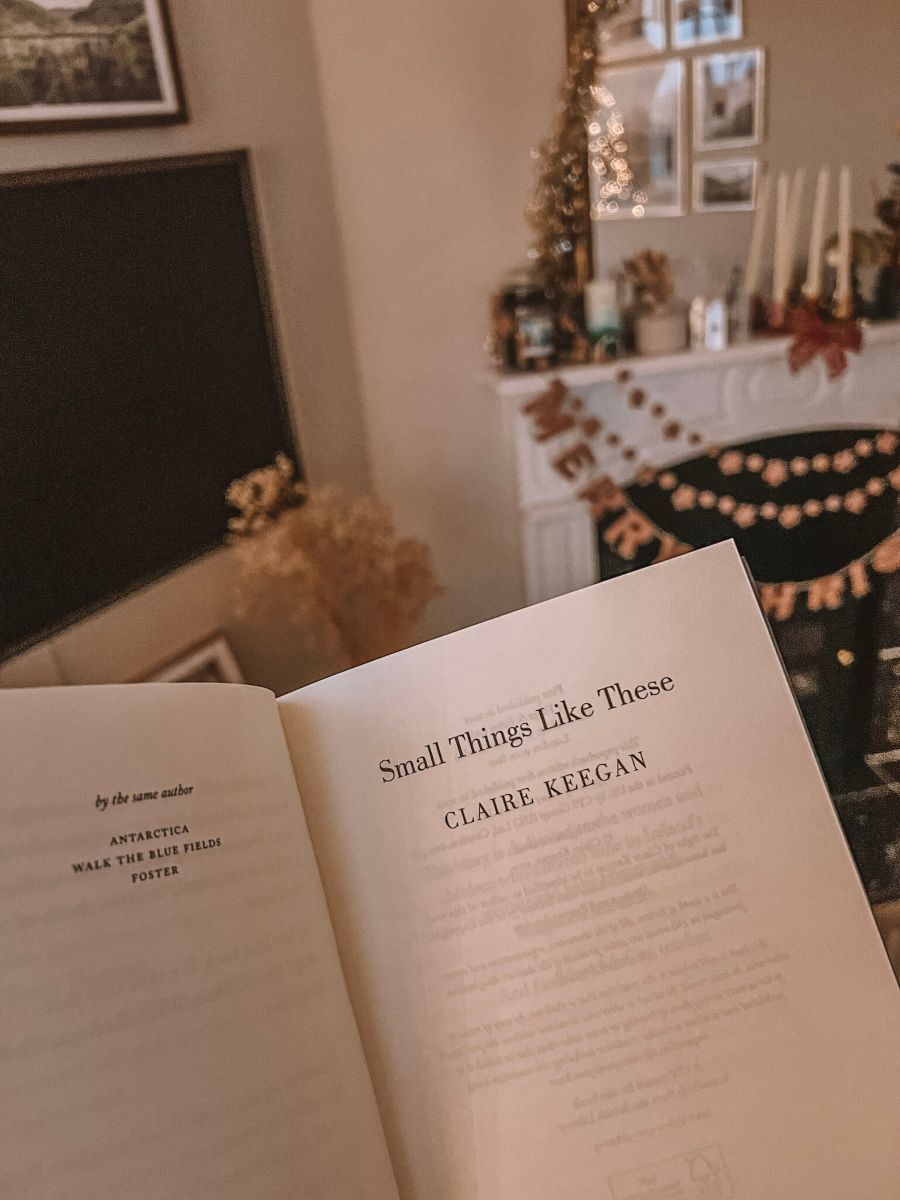
If you’re looking for a slim novel that sparks big conversations, Small Things Like These by Claire Keegan is an excellent choice.
I read this with my book club recently, and it ended up being my favourite pick of the entire year.
At just over 100 pages, it’s incredibly short (you can easily finish it in an hour or two) yet it delivers an emotional punch that lingers long after you’ve turned the final page.
It was my first Claire Keegan read, but certainly not my last – it’s simple but moving and atmospheric.
Small Things Like These Summary
Set in a small Irish town in the mid-1980s, the story follows Bill Furlong, a coal merchant and father of five daughters.
In the busy run-up to Christmas, he delivers fuel to a local convent and makes a discovery that quietly shakes him.
What he sees forces him to confront not only the moral failings of the community around him but also the unanswered questions in his own life.
Through Bill’s gentle and contemplative perspective, Keegan paints a portrait of courage, and the small acts that shape who we are.
This discussion guide forms part of my wider Book Club Questions series, created to support thoughtful group conversations around books.
If your book club has chosen Small Things Like These, here are some discussion questions to get the conversation flowing.
Small Things Like These Book Club Discussion Questions
1. What role does gender play in this novel?
From Bill’s mother to the women confined in the convent, to Bill’s own daughters, gender shapes every part of this story. How does Keegan use the imbalance of power to highlight the broader social issues of the time?
2. What do you think this novel is trying to say about religion?
Keegan explores the power the Catholic Church held over Irish communities during this period. How does the book critique that authority, both through the convent’s behaviour and the townspeople’s willingness to look away?
3. Even before Bill’s discovery at the convent, he seems deeply unsettled. Why do you think that is?
Bill is outwardly a contented family man with a stable business, yet there’s a quiet melancholy to him. What do you think fuels that dissatisfaction? Is he simply tired and worn down by the pressures of life, or is something in him already aware of the town’s darker undercurrent?
4. How did Bill’s upbringing (particularly his mother’s situation) impact his actions?
Do you think Bill sees his younger self reflected in Sarah? How much does his own past drive him to act when others won’t?
5. Do you think the townspeople are aware of what’s happening at the convent?
Is the ignorance genuine, or a choice born from fear and convenience?
6. Do you consider Small Things Like These to be a Christmas story?
Though it’s set during the festive season, it’s hardly a cosy tale. Does the Christmas backdrop enhance the story’s contrasts between light and dark, generosity and neglect?
7. How did you interpret the revelation that Ned may have been Bill’s father all along?
How does this late-in-life realisation reshape Bill’s understanding of his childhood? Does it change your reading of his decisions throughout the book?
8. What did you make of the woman feeding her three children Weetabix?
This brief but striking interaction says a lot about poverty, resilience, and the quiet struggles happening behind closed doors. Why do you think this moment sticks with Bill?
9. What is the significance of the 500-piece jigsaw of a farm?
This seemingly small detail appears more than once. What might the jigsaw symbolise – family life? Fragmentation? The illusion of order? Consider how it reflects Bill’s inner world.
10. How do you think Bill’s wife will react when he returns home with Sarah?
Her reaction is one of one of the things I was most curious about at the end of the story. Would she be angry? Fearful? Understanding? Or resigned to the consequences?
11. Do you think there will be consequences for Bill and his family?
Given the community’s dependence on the Church, do you imagine Bill’s act of compassion sparks change, or backlash?
12. What message do you think the story ultimately wants to leave us with?
Is it about moral courage? Compassion? The danger of silence? Or the everyday choices that shape our lives?
13. Did the story length work for you, or do you wish it had been longer?
Some readers find its brevity powerful; others want more space for the story to unfold. Which camp are you in?
14. Can you draw any parallels between the novel and events happening in the world today?
From institutional power to collective silence, many of the themes feel painfully relevant. What modern issues does this novella remind you of?
15. If you watched the 2024 film adaptation, how do you think it compared to the book?
What worked? What didn’t? Did the film alter your understanding of the characters or themes?
If your book club loves short but impactful reads, or you’re looking for a novella that inspires a big conversation, Small Things Like These is a brilliant pick. It may be small in size, but it’s rich in meaning – and it stays with you.
You can pick up a copy of Small Things Like These by Clare Keegan here.
If your book club enjoyed the reflective, character-led themes in Small Things Like These, you might also enjoy discussing: