Book Review: What the Chinese Don’t Eat by Xinran
Looking for an honest review of What the Chinese Don’t Eat by Xinran? Here are my thoughts about the book as a British Chinese woman to help you decide whether to pick this one up.
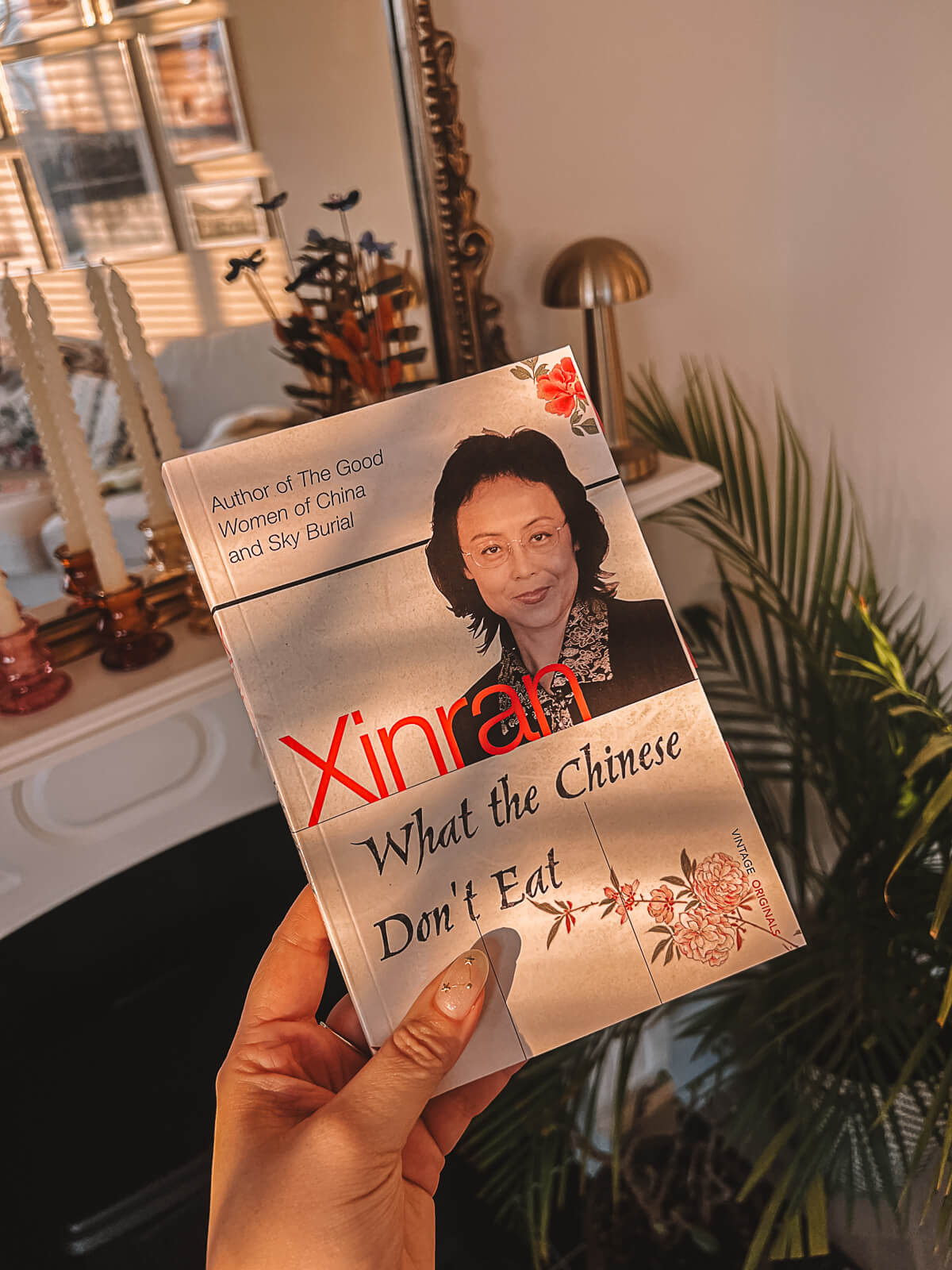
What the Chinese Don’t Eat (at a glance)
Author: Xinran
Genre: Non-fiction / Cultural essays
Published: 2005
My rating: ★★★★☆
Best for: Readers interested in Chinese culture, cross-cultural insights, and short, thought-provoking essays
What the Chinese Don’t Eat summary
Originally written as a column for The Guardian, What the Chinese Don’t Eat brings together a series of essays exploring everyday life in China through a deeply personal lens.
Across these short pieces, Xinran reflects on everything from family dynamics and relationships to cultural traditions and social expectations. Many of the topics are prompted by questions from Western readers, allowing her to address common curiosities (and misconceptions!) about Chinese life.
Rather than offering a traditional overview of China, the book focuses on individual stories and lived experiences, highlighting both the contrasts and unexpected similarities between Chinese and British culture.
What the Chinese Don’t Eat review
In an effort to connect more with Chinese culture, I’ve recently been working my way through books by Chinese authors, and starting with Xinran felt like the natural place to begin.
What the Chinese Don’t Eat offers a fascinating and highly accessible insight into aspects of Chinese culture that are rarely discussed in the West.
Rather than attempting to provide a sweeping historical overview, Xinran focuses on small, human stories, many of which stay with you long after you’ve finished reading.
As someone who is half Chinese and half English, I went into this book already feeling connected to the subject matter, but I was still surprised by how much I learned.
The book deepened my understanding not just of cultural traditions, but of the everyday realities of life in China, particularly through stories that aren’t widely shared.
Structurally, the book is made up of short essays originally published in The Guardian, which makes it incredibly easy to read. Most chapters are only a few pages long, so it’s ideal for dipping in and out of rather than reading in long sittings.
One of the book’s greatest strengths lies in this brevity. While some readers have criticised the essays for lacking depth, I found the opposite to be true.
Xinran captures complex histories and deeply personal experiences in just a few pages, often leaving space for ambiguity.
Not every story is neatly resolved (sometimes not even for Xinran herself), and that lack of closure makes the accounts feel more realistic.
It also left me with a lot of questions and a genuine desire to learn more about Chinese history and culture, which feels like the point.
A recurring thread throughout the collection is the experience of women. Many of the essays explore themes of oppression, expectation, and resilience, both within China and in comparison to life in Britain.
This book may therefore appeal more to women who may be able to relate to some of the pains and pressures faced by the people featured. However, the stories don’t exclude men though by any means and serve as an interesting historical lesson for all.
What elevates these short essays beyond standard cultural commentary is that they’re tinged with Xinran’s own experiences and anecdotes.
These are not detached observations; they are grounded in her own experiences as a journalist working in both China and the UK.
Having worked as a journalist in both communist China and “liberal” Britain, Xinran has a lot of stories to tell!
Perhaps what I appreciated most is how directly the book engages with the differences between British and Chinese culture.
There are surprisingly few books that explore this intersection in such an approachable and nuanced way, and Xinran does so without ever oversimplifying either side.
If you’re looking for a comprehensive history of China, this isn’t that book. But if you want something more intimate, something that captures the texture of real lives and lived experiences, this is an excellent place to start.
If you enjoy thoughtful, bite-sized essays that may make you see a culture differently, this is well worth picking up. Grab a copy here:
Amazon | Bookshop.org
If you want to read more books by ESEAn authors, you may also enjoy these reads: