Film Review: A Pale View of Hills
Often, people don’t tell untruths
just to mislead people.
They do so to mislead themselves
and hide from difficult truths.
– Kazuo Ishiguro
I recently attended a preview screening of A Pale View of the Hills, an adaptation of Kazuo Ishiguro’s debut novel of the same name.
I had not read this book before, but I have read several other works by Ishiguro, so I had an idea of what to expect, but this did not prepare me for the plot twists coming at all.
Set between post-war Nagasaki and 1980s England, the film follows a pair of Japanese women in the wake of the atomic bombing in Japan, and one of those Japanese women later living in the UK with her mixed-race daughter.
Without giving too much away, the story explores themes of grief, guilt, trauma, and displacement, which gradually unfold across the two timelines.
Before the screening, I was lucky enough to hear from the producer Stephen Woolley and actress Camilla Aiko. It’s always fascinating to hear about the creative process and the intention behind what we see on screen, and this helped me contextualise the film a little.
But what did I make of this film in the end?
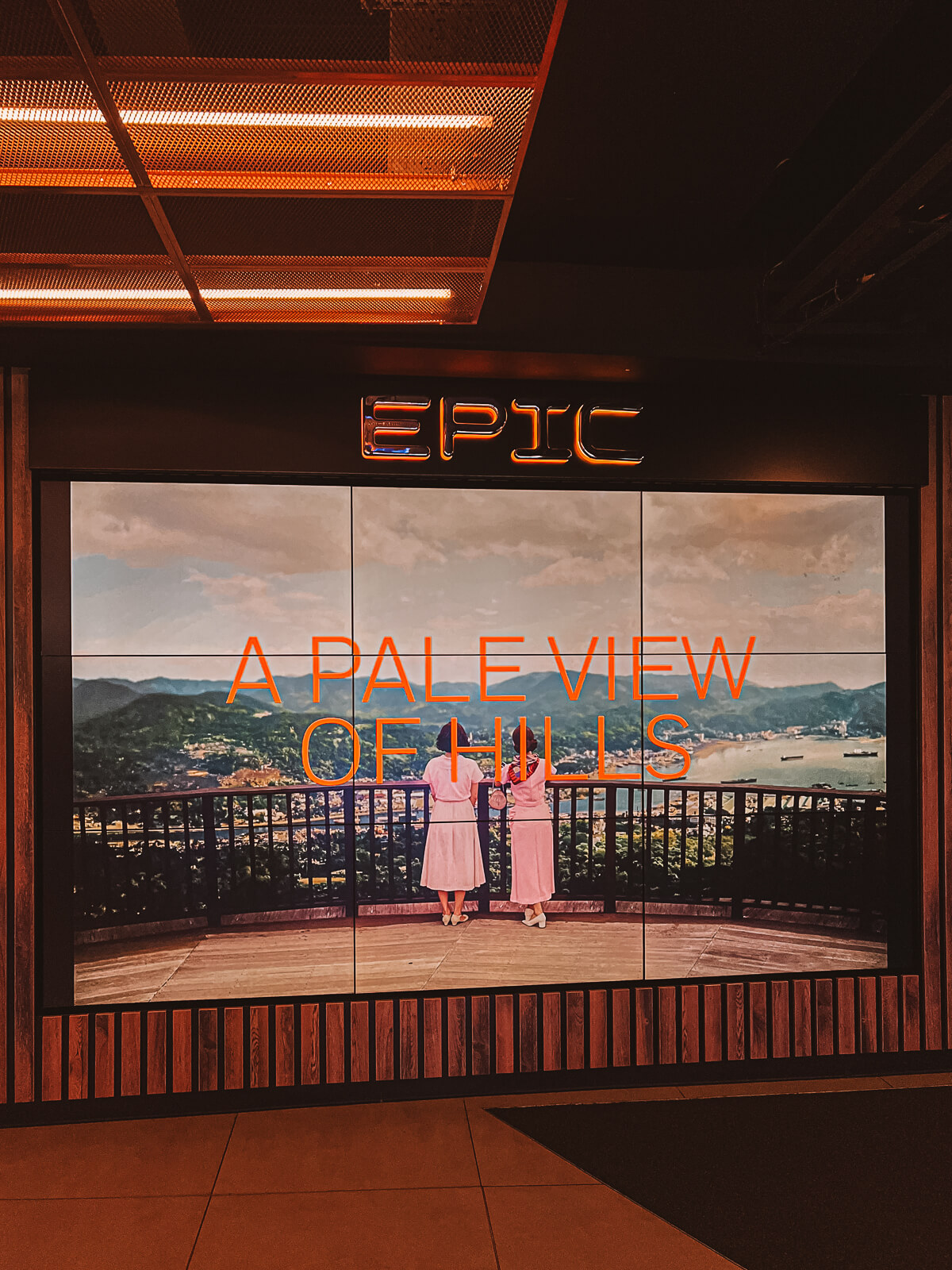
Visually, this is an absolutely stunning film. The cinematography is striking throughout, but particularly in the Japanese sequences, where the use of colour and cinematography feels almost dreamlike.
The performances from the actors are equally strong, and I was invested in each character, even when their motivations weren’t entirely clear. Each actor brought an emotional depth to their performance that very much suited the tone of the film, which has a somewhat sombre and haunting quality to it.
However, what let the film down for me was the storytelling itself. After spending much of the runtime moving gently between the two narratives, I became increasingly aware that there was limited time left to resolve all of the questions in my head. And there were a lot of questions.
Ultimately, I was left with more ambiguity than I would have liked, and that was slightly frustrating.
The Nagasaki storyline feels richer and more fully developed, making it the more compelling of the two storylines. In contrast, the England scenes feel comparatively subdued and raise more questions than they answer.
That said, I did find the relationship between Niki and her mother particularly interesting, especially as someone who is mixed East Asian and English myself.
The film then builds towards a significant twist near the end, one that I absolutely did not see coming. As soon as the film ended, my friend and I were exchanging our theories on what we’d just watched!
It’s clear that the intention is to leave the audience questioning what really happened, but, personally, I was a little frustrated. I tend to prefer stories that leave everything tied up nicely in a bow, but here I was left wanting answers that never came.
That said, I suspect that this story may work better in novel form, where its more introspective and ambiguous parts can be explored more fully and in the reader’s imagination. So I went out and bought the book the very next day, so I could find out for myself.
While the film captures that dreamlike atmosphere beautifully, it doesn’t always translate into a fully satisfying narrative on screen.
Overall, I’d give A Pale View of the Hills three stars. It’s a visually beautiful, but ultimately left me wishing for a little more narrative resolution.
Watch the trailer for A Pale View of Hills here.
If you want to dive into more Japanese culture, check out these works of Japanese literature.