
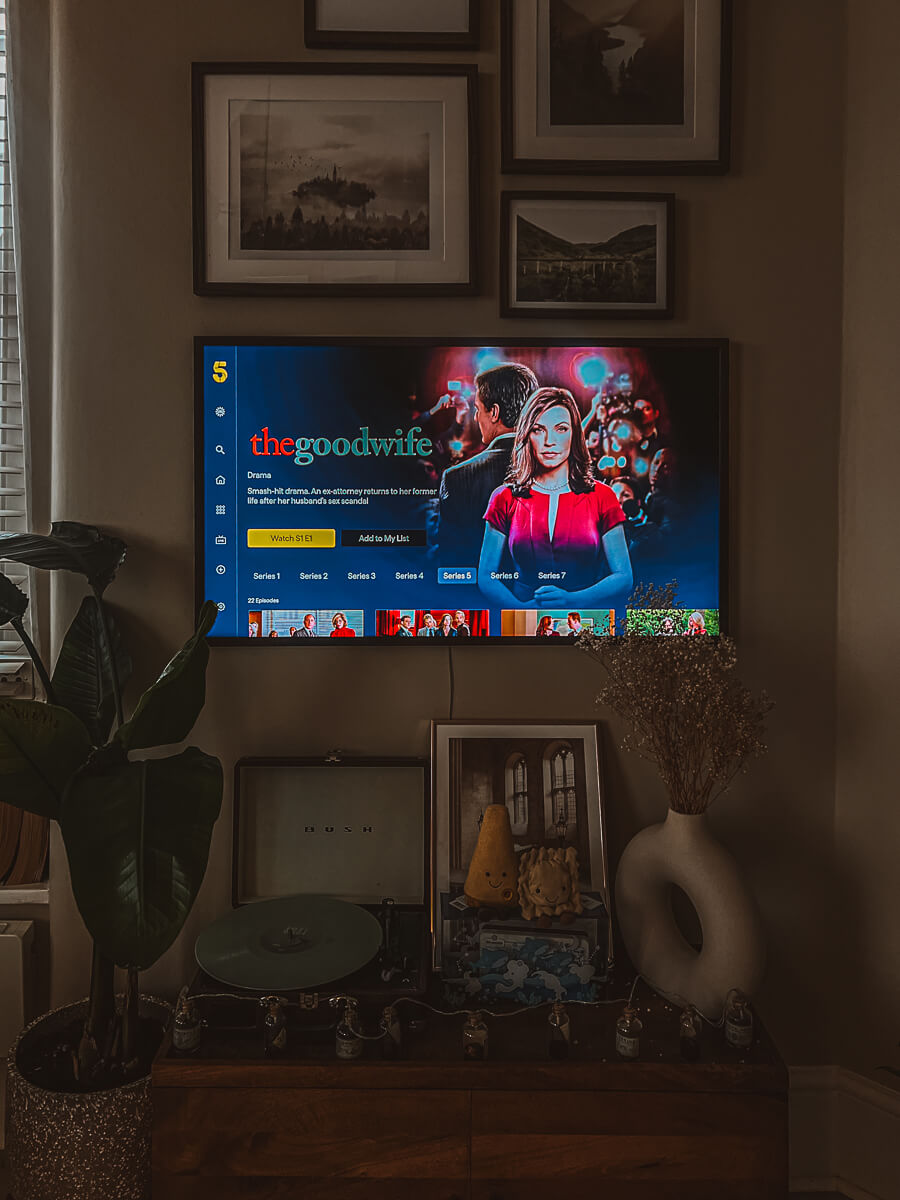
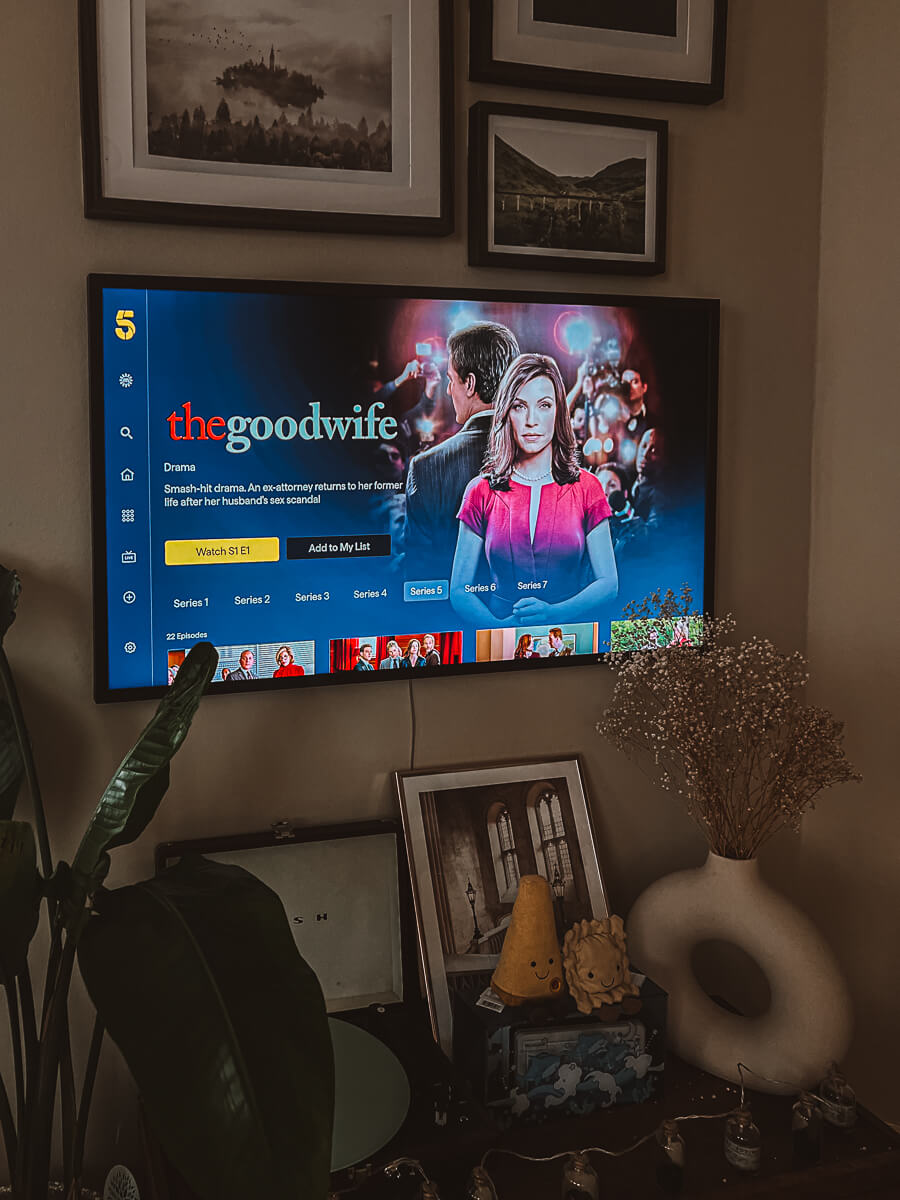
The Good Wife Season 5 Review: Alicia Florrick, Finally Unleashed

Season 5 of The Good Wife marks one of the most important turning points in the entire series.
It’s the season where Alicia Florrick stops reacting to events around her and starts actively shaping her own future – professionally, morally, and emotionally.
If you’ve ever felt that Alicia was capable of more than she was being allowed to show, this is the season where the show finally lets her loose.
Please note: this review contains spoilers for Seasons 1–4 of The Good Wife.
Before reading on, you may also want to read my reviews of the earlier seasons, which chart Alicia’s evolution:
- The Good Wife Season 1: A Stunning TV Debut
- The Good Wife Season 2: Slow Start, Exciting End
- The Good Wife Season 3: From Strength to Strength
Season 5 opens with Alicia and Cary attempting to break away from the familiar power structures of Lockhart & Gardner (ahem, oppressive rule of Diane and Will) to establish a firm of their own.
On paper, it’s an exciting professional leap.
In practice, it’s messy, risky, and emotionally charged. Alicia’s history with Will, her position as a partner, and the deeply entrenched loyalties within the firm make this transition anything but clean.
But this season is less interested in the mechanics of starting a new firm and more focused on the impact this has on the characters’ personal and professional relationships.
Trust is in short supply, betrayals come from unexpected directions, and alliances feel increasingly fragile.
The show leans into moral ambiguity, refusing to give the audience easy heroes or villains – a choice that pays off enormously.
Alicia has always been a fascinating protagonist, but she’s also been a frustrating one.
In earlier seasons, I often found myself flip-flopping between admiring her quiet resilience and wishing she would be more assertive.
Season 5 resolves that tension decisively.
This is Alicia at her most confident, strategic, and, frankly, formidable. She makes bolder choices, accepts the consequences of her actions, and stops apologising for wanting power.
A huge mid-season plot twist (genuinely one of the most shocking moments the series has delivered) acts as a catalyst for this transformation.
Rather than existing for shock value alone, the twist fundamentally reshapes Alicia’s worldview and accelerates her character development in a way that simply wouldn’t have been possible otherwise.
Knowing that the producers intentionally engineered this moment to allow Alicia to evolve further makes it all the more satisfying. This is the season where she fully steps into her own, and the show is infinitely better for it.
Although Alicia remains the undisputed centre of the series, Season 5 does an excellent job of elevating the supporting cast.
Cary, Diane, David Lee, and Robin all gain greater prominence, each with storylines that feel purposeful and what’s impressive is how richly drawn these characters are without detracting from Alicia’s journey.
The writers manage to weave complex backstories and competing motivations into the narrative, reinforcing the sense that this world exists beyond its lead character.
It’s one of the reasons The Good Wife feels so layered compared to many other prestige dramas.
The legal storylines in Season 5 are some of the show’s strongest yet.
Alongside familiar clients, we’re introduced to cases that grapple with genuinely difficult and often uncomfortable issues: death row, capital punishment, social media ethics, divorce, and abortion.
These aren’t presented as tidy moral puzzles with obvious answers. Instead, the show repeatedly asks the viewer to sit with ambiguity and reconsider their own assumptions.
As someone who works in law, I’ve always felt that one of the great strengths of The Good Wife is that it resists glamorising the legal profession. While the drama is heightened, the series consistently acknowledges the long hours, ethical compromises, and emotional toll of the job.
Lawyers here are not crusading heroes; they are professionals doing difficult work in imperfect systems, often defending clients they don’t necessarily believe in.
That realism sets the show apart from more stylised legal dramas like Suits or How To Get Away With Murder.
By the time the season ends on yet another tantalising cliffhanger, it’s clear why Season 5 is so frequently cited as a high point in the series.
The pacing is tighter, the character work deeper, and the stakes feel higher than ever before. Everything that The Good Wife does well – moral complexity, sharp writing, and nuanced performances – is operating at full strength here.
It’s not just a great season of television; it’s a crucial chapter in Alicia Florrick’s story and the moment where The Good Wife truly cements itself as one of the smartest legal dramas of its era.
All in all, Season 5 is essential viewing for fans of The Good Wife. It’s bold, emotionally charged, and unafraid to fundamentally change its central character. If earlier seasons laid the groundwork, this is where the show fully delivers on its promise.
Have you seen Season 5 of The Good Wife? Do you think it’s the show at its peak?




I have been meaning to check this out for a while now it does sound like an interesting series.
We’ve heard of this series but never watched it! Sounds intriguing must try and find a boxset x
I haven’t ever seen the good wife nor heard of it but I’ll have to look it up and gove it a go!
This is not a series that I am aware of, however will be looking out for it now. I love legal dramas and watch a couple of them. I think this could be my new series to binge watch! xx
I haven’t heard of the good wife however, this series sounds interesting! I love legal dramas! It makes me think. Will definitely add this to my drama list. I’m currently watching a Japanese legal series. I don’t know the English title though.
I don’t watch this, I’ve never heard of it tbh! Sounds like I am missing out xo