
Film Review: The Dark Knight Rises
READ FIRST: Batman Begins Film Review
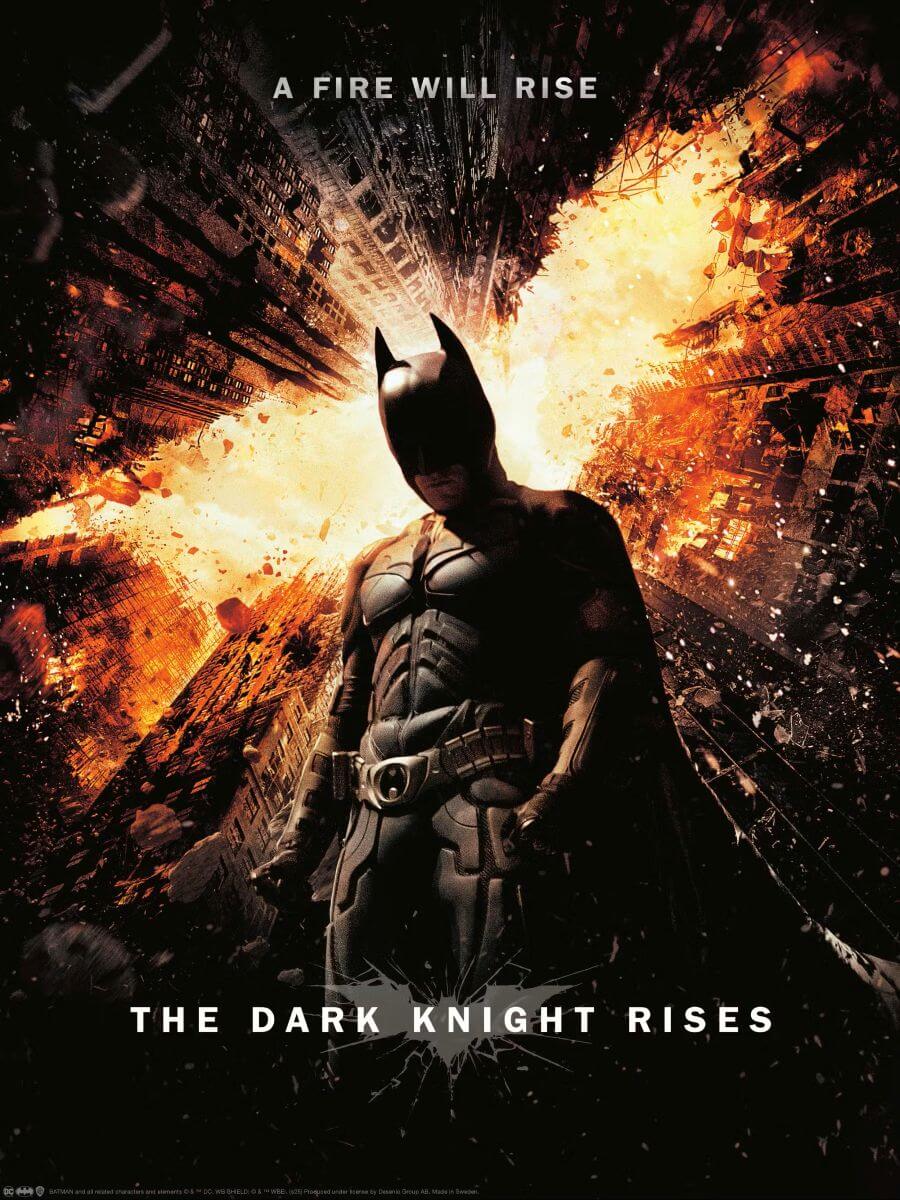
When The Dark Knight Rises was released as the final chapter in Christopher Nolan’s Batman trilogy, it arrived with enormous expectations. I went into it with almost none – it was actually the first film in the Batman trilogy that I ever watched.
I wasn’t a Batman fan. I hadn’t seen Batman Begins, hadn’t connected with The Dark Knight (yet!), and assumed Nolan’s version of Gotham simply wasn’t for me.
Watching the trilogy out of order may seem like an odd choice, but The Dark Knight Rises completely won me over.
The emotional arc landed so strongly that it sent me straight back to watch the trilogy from the beginning, and it’s one I’ve returned to repeatedly over the years.
More than a decade on, it remains one of the most effective examples of how a superhero film can deliver scale, emotional weight, and a genuinely satisfying story – even as a standalone experience.
The story is set eight years after the events of The Dark Knight. Gotham appears peaceful, crime has been driven underground, and Bruce Wayne has withdrawn from public life.
He’s no longer the confident billionaire playboy, but a reclusive figure physically and emotionally worn down by his past choices.
Key relationships and past events are reintroduced with enough clarity to ground the story, without heavy exposition.
Rather than leaning on franchise familiarity, the film focuses on consequence – what happens after the hero wins, and what it costs to rise again.
What elevates The Dark Knight Rises above many superhero films is its emotional core. This isn’t a story driven purely by spectacle or action. It’s about endurance, identity, and whether redemption is possible once everything has been stripped away.
“Rises may lack the surprise of Begins or the anarchy of Knight, but it makes up for that in pure emotion.” (Empire)
The film takes its time, but it earns its runtime. Rather than relying on constant action beats, it builds tension gradually, allowing character arcs to unfold slowly and deliberately.
For a film of this length, it remains remarkably absorbing.
Christian Bale delivers his strongest performance of the trilogy here. His Bruce Wayne is fractured, guarded, and visibly tired – a man who has already paid the price of being Batman and isn’t sure he can do it again.
And that vulnerability grounds the film’s more dramatic moments.
Anne Hathaway’s Catwoman brings wit and agility to the story, adding lightness without undermining the darker tone.
Her performance strikes a careful balance between charm and calculation, and her chemistry with Bale feels natural.
Then there’s Tom Hardy’s Bane – physically imposing and quietly unsettling.
Beneath the mask, his performance relies less on spectacle and more on control and presence, making him a genuinely intimidating antagonist.
Christopher Nolan’s direction favours practical effects and real locations over excessive CGI, which gives the film a cinematic quality that still feels impressive today.
The most common criticism of The Dark Knight Rises (and one that remains valid) is Bane’s voice. In some scenes, particularly those heavy with action, his dialogue can be difficult to follow.
That said, on rewatch (especially with subtitles), the performance becomes clearer and more effective.
The voice adds an unsettling calm to the character, even if it occasionally sacrifices clarity.
So does The Dark Knight Rises hold up today?
Yes – it absolutely does.
Whether you’re watching it as part of the trilogy or, like I did, encountering it first, The Dark Knight Rises works remarkably well.
It’s ambitious and emotionally satisfying in a way many blockbuster finales struggle to achieve.
What began as my introduction to Nolan’s Batman became the gateway to one of my favourite film trilogies – one I’ve watched and rewatched over the years.
Even now, it stands as a reminder that superhero films can be about more than saving the day – they can be about loss, resilience, and choosing hope when it feels hardest to do so.
And whilst one of the most surprising strengths of The Dark Knight Rises is how accessible it is to new viewers.
My recommendation to any new watchers is to start from the beginning of the series as you’ll be able to fully appreciate the character arcs and any references to previous films.




I will watch Batman films but they are not my favourite. My husband loves them. x
Ive never actually seen this film, but want to give it a go now. Thank you!